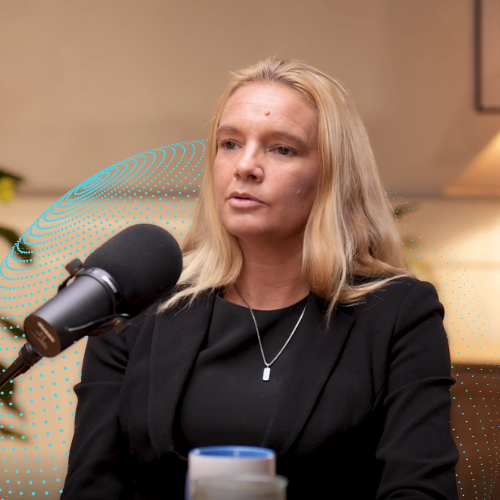
We recently sat down with Broadridge’s Head of Global Growth Solutions, Gemma Cowie to explore what firms should consider to build a data strategy that supports product development, optimises distribution, and bolsters client intelligence.
Watch the full interview
This article is part of Citisoft's Solution Market Perspective Series which explores how leading service providers are responding to shifting client needs across the investment management ecosystem.
When firms come to Broadridge, it’s rarely just a data problem—I anticipate it’s something closer to “we’re not growing as expected” or “our product strategy isn’t landing.” What are the underlying issues you typically uncover?
There are so many different approaches that we're getting from clients at the moment. When we're looking at the asset management community and looking at our data sets, the average asset manager is actually shrinking. Flows are becoming difficult and challenging for firms to obtain.
Data is one of the critical parts of being able to understand and tell that story around the insights—because for every organisation that typically approaches Broadridge, the challenge isn't a data one. But I’ll pause there because there are some cases where the challenge is a data one. The other challenge is more commercial and strategic as you've mentioned. Asset managers may ask:
ETFs is definitely a conversation that many firms are coming to Broadridge for, asking, “can I benchmark myself against all the peers that are out there?” So, there is a number of those of different approaches that are coming through. And then we have the data questions, where asset managers may ask, “I have so many different bits of data, but I don't have all the insights into the clients that are buying my fund. Can you give me a level of granularity? Can you stitch things together?”
With the kind of conversations that we're having at Broadridge, we are connected into the arteries of so many different systems. We see so much data, but data is a little bit helpless if you don't have the insight and the understanding. It's connecting that into the broader business.
At Broadridge, we are having a lot of conversations around firms who are saying, “I feel like I almost have too much data.” They're looking at their client experience stack, their perfect has been the enemy of good here, and they're looking at a vendor estate, which is considerable. And the firms are of saying, “we're spending so much time trying to reconcile our data, it's causing lack of trust. I've got one vendor saying this and another vendor saying that and so that makes it difficult for us to make decisions.”
I suppose you and I can reflect on this because obviously we've both been an asset manager for a number of years. It's a bit like when an asset manager is asked, “can I have the AUM number?”, and the answer back from the organisation will be, “what AUM number do you want to see?” What's becoming important is the ability to reconcile that information across the business to enable better decision-making.
With vendor consolidation, given cost pressures, a lot of firms are looking at how they can simplify and develop that foundation to build a really valuable data proposition.
There's no shortage of data in the market, but there's often a gap between having it and embedding it to make decisions. Where do you see that breaking down and where does better data change the outcome, particularly in respect to product and distribution decisions?
The challenge is quite often the organisations we’re operating within are very fragmented and there are different divisions of the asset management business that sometimes have access to different data points. One of the critical things is largely between the client facing teams and the finance teams. You can have different interpretations of client names and how firms want to view that, which can be challenging in the implementation of things like a CRM system, and that carries through to the other parts of the data. You have that in regard to client intelligence. Client intelligence plus valuable market intelligence results in the ability to make better business decisions. Thinking with that lens of products and distribution, asset managers will ask the questions:
- Is my product in the right vehicle type?
- Is it operating in the right territory?
- Am I pricing it correctly?
- Am I capturing the flows of peer products?
- Where are they going from the distribution perspective?
- What countries should I be operating in, what channels within those countries?
- What are the enablers from that?
And so, we've got some very interesting data sets that look across where the country flows are happening that go down into the clients. But data is only valuable if it gives insight and those insights enable them to execute. You can have as much data as you have in the world, but if you don't enable the senior leaders within the business to make effective decisions off the back of that, then that is incredibly challenging.
Firms talk a lot about their desire to be “closer to the end investor,” but it’s often abstract. What does that mean for you, and where have you seen investor-level insight genuinely change behaviour?
A lot of organisations that you've probably seen yourself have implemented their client relationship management systems. Those that are using it well to get client intelligence and surfacing notes about those clients are able to build those relationships. I mean, anecdotally, the average holding period for a fund on our data sets is around four years. So trusted relationships are important for organisations because, to move the needle, to move the dial, is quite something for an organisation.
Piecing these together and getting close to the client is understanding what they need. There's been some derivations of how an asset manager does that. There was a big push for solutions and being solutions orientated to be able to understand client intelligence, organise the organisation and push the proposition back out.
We're seeing a few things that are happening in our industry. Obviously, there is a plethora of funds, always has been, and probably will continue to be because there's still competition, but those that succeed are those that know what they are, who they are and how they're operating and organising behind it. Getting closer to the client, speaking to some of the wealth managers as well, is important. Valuing trust and transparency, understanding that your portfolio manager is going to move on or going to retire, or something isn’t going quite right is why having that face time is important.
Certainly, you've heard that very much in the private markets division as well, where we're seeing some elements of challenges. They're getting closer to the client and then using those insights aligned to the market intelligence—the client intelligence plus market intelligence—to create effective insights and have consistent views so we can go deep into the client.
For example, insights into who's buying the funds, and where, and the channels, and the data. We can also look at what's typically happened in certain market environments. So, firms can think about arming their kit bag at the right time and pose questions like “look at this macro environment, what's that look similar to? How does high yield perform in those circumstances?”
Therefore we can think about where we might fill signalling because no one can forecast with 100% accuracy that a firm is going to deploy their capital at that period of time. Think about where the signal should be so that I deploy in the right places, so I organise my finite resources in the best manner. Those are the kind of things we're seeing be successful.
To give you an opportunity to tie that back to Broadridge, what are the solutions within the Broadridge universe that assist the client in getting closer to the end investor?
Broadridge recently bought a business called Acolin and, actually, I was a client of Acolin myself. As a firm who wants to have international expansion, Acolin has distribution network management agreements whereby it opens up the platforms for whichever countries you want to operate in, and it does your retrocession payments.
So that's the plumbing and pipe work part of it. In terms of the data and the analytical tools, I mentioned before about the global demand model. Broadridge is seeing more clients evaluate how they're faring versus the tool—sizing their opportunities, using it in product design to size a market, size a channel, to look to see whether or not they feel that they have an opportunity. We have scorecards in our market intelligence practice whereby you can evaluate how you're faring; "are you faring in line with market?," "Who are your largest competitors?"
And then there is the fund buyer intelligence, where we interview thousands and thousands of fund selectors on a monthly basis and get a temperature check about what they care about, what they're looking into the market. So, we can get that information by stitching the data sources together, working very much with their client intelligence systems to give a good view of client and buying behaviour.
On the predictive side, there's clearly a push to try to anticipate demand. From your perspective, what actually needs to be in place—in terms of data, tooling, and client adoption—for that to work in practice?
For predictive models, a lot of firms are speaking to both of us around their need to implement AI. Lots of board and industry conversations about artificial intelligence and how that can create efficiencies and all the like. That won't be successful if you don't have a very strong data foundation and data lake.
First, is getting that data foundational part right, and then understanding the operating model around it—who's going to be looking at the signals? Because for some organisations, it might sit in a data team, it might sit only in the market intelligence team, and so the influence of that data and that insight doesn’t go broad, it comes into a narrow point and then it's distributed out. Sometimes it’s an email. Emails sometimes don't get read. And so you have these challenges. The operating model depends on being able to have that expediency from solid foundations through understanding the signals, what’s noise and what’s true.
With Broadridge’s own predicting model and the global demand model that we've created, this was hours and hours and hours and hours of refinement and testing, of looking back through our years and years of historical data sets, sophisticated models and testing, and we produce our evidence into, when we've done our predictions, how successful we’ve been. And the accuracy that we've got is pretty good.
Market events will never make it entirely perfect. We know that when a significant macro-event happens, it will clearly influence buying behaviour. But overall, there is a smoothing that you do see through time—we are seeing fairly buying persistence, so the operating model for signalling is probably better. Predictions are never going to be exact things, but getting good signalling and being able to organise your resources around that is important. But firms that will ultimately be successful will connect those dots and do so quickly.
Looking ahead, if firms get all of this right, where do you see the real competitive edge emerging, and how will that show up in the market over the next few years?
One of the things that would be successful for organisations is a phrase that we've coined at Broadridge called “distribution alpha.” Successful asset management firms, historically, always used to say it's about the quality of an investment team and the persistency of the investment performance. That still is true.
You’re not going to have a successful asset management firm if you don't have the performance and you don't have a quality of investment team. But “distribution alpha” is around that ability to be really close and connected to the clients—having strong intelligence about what it is that they are looking for, the breadth of the market, the connectivity, the behavioural characteristics of that client.
So that strong client intelligence, embedding that into the firm, is important. But it comes off strong data foundations, clearly. Organisations that have a strong, connected, trusted data foundation across, which everyone buys into. It's not ten different versions, several different vendors of different approaches. Having that data foundation and being able to derive expedient insights off the back of that and then taking that to executions. The firms that will win will connect the insights to the execution so quickly and make decisions fast, 100%.
Watch the full interview
For more information on what other solutions providers are doing in this space, read our Solutions Market Perspective Series









.png?width=200&height=200&name=Blog%20-%20Featured%20Images%20-%20500%20x%20500%20(5).png)
.png?width=200&height=200&name=Blog%20-%20Featured%20Images%20-%20500%20x%20500%20(6).png)
Comments